Preview footage from the 2025 impact stories
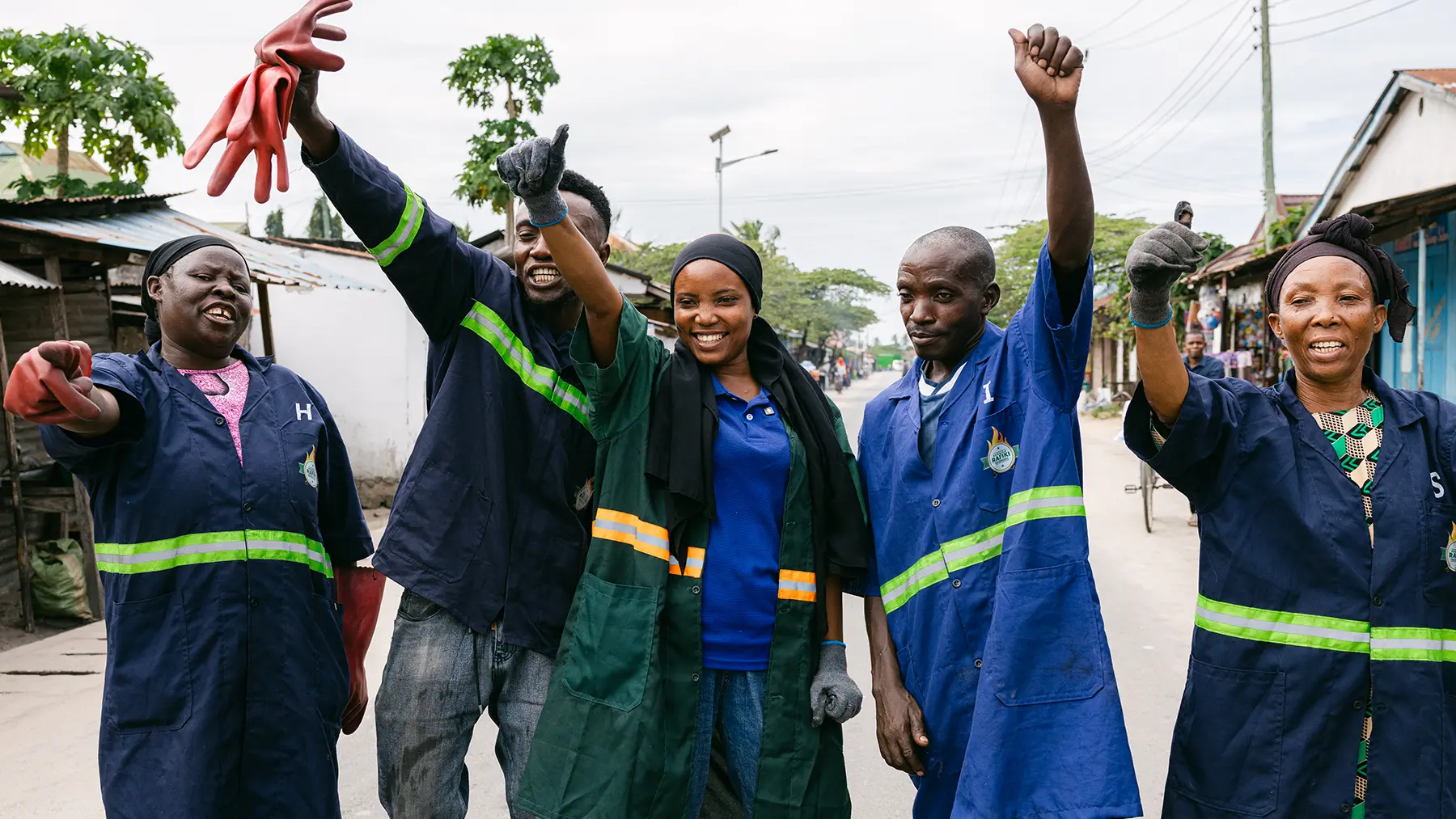
Neema's Story
Secretary general of the Kigilagila Rafiki Mazingira Group
I’m a member of the Kigilagila Rafiki Mazingira Group, I joined almost three years ago and am now the group secretary.
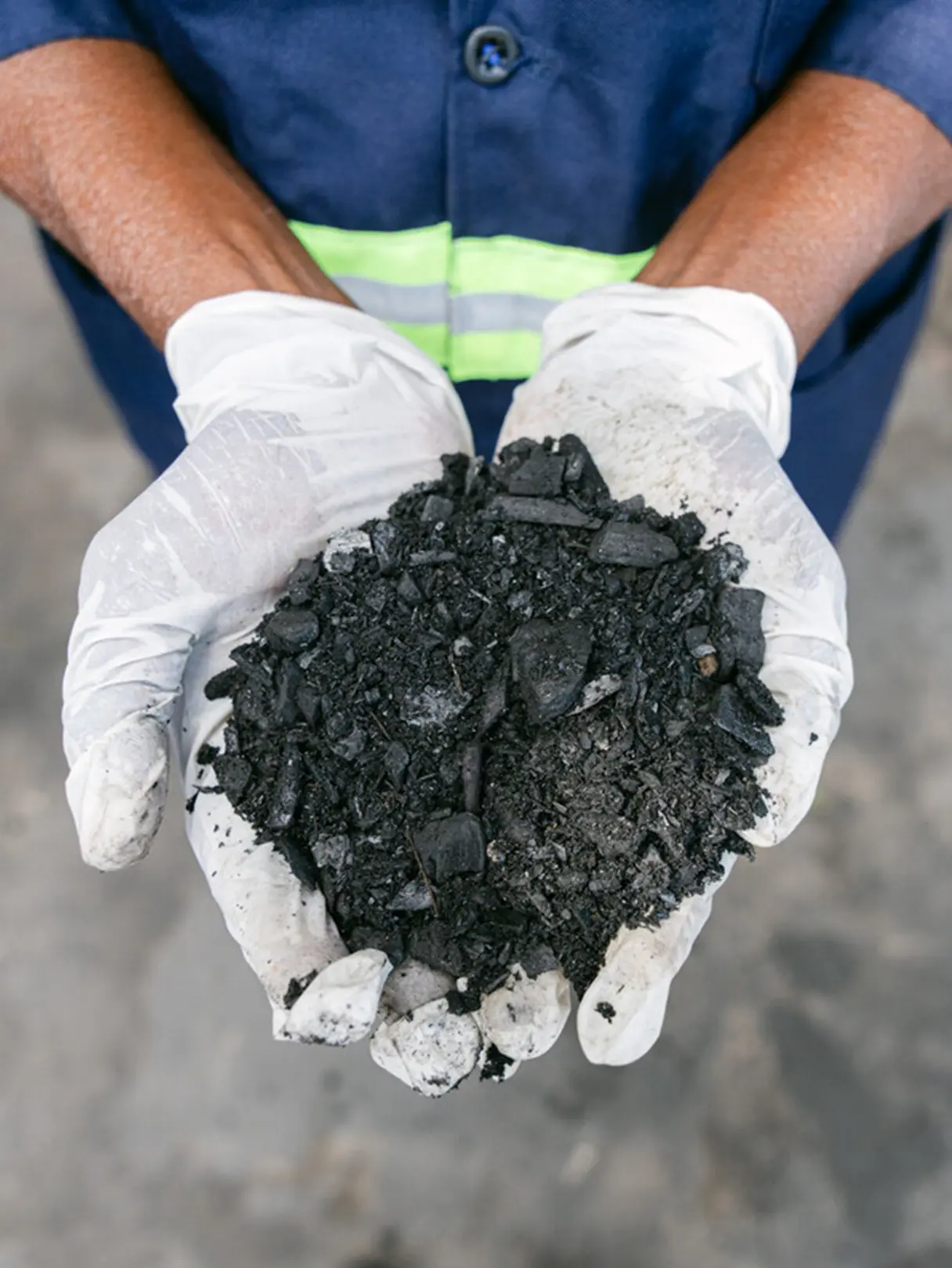
We produce briquettes, and it’s a production process where I’m involved at every stage. I’ll take you through how we do that:
The first stage, we need to collect raw materials. To produce briquettes, we use solid waste from the local environment, sourced from trees, plants, and also animals and the local community. Then, we bring it to our factory.
Once it’s here, we sort it into separate materials, as some could be hazardous, some are rotten, and some are hard.
Next, we need to lay it out, because the waste is a mix of different materials—some are wet or moisturized, so it needs sunlight to dry.
Once it’s dry, we put it in the carboniser to start the carbonising process. The carboniser turns the waste into the material we need, which we then grind to get the dust.
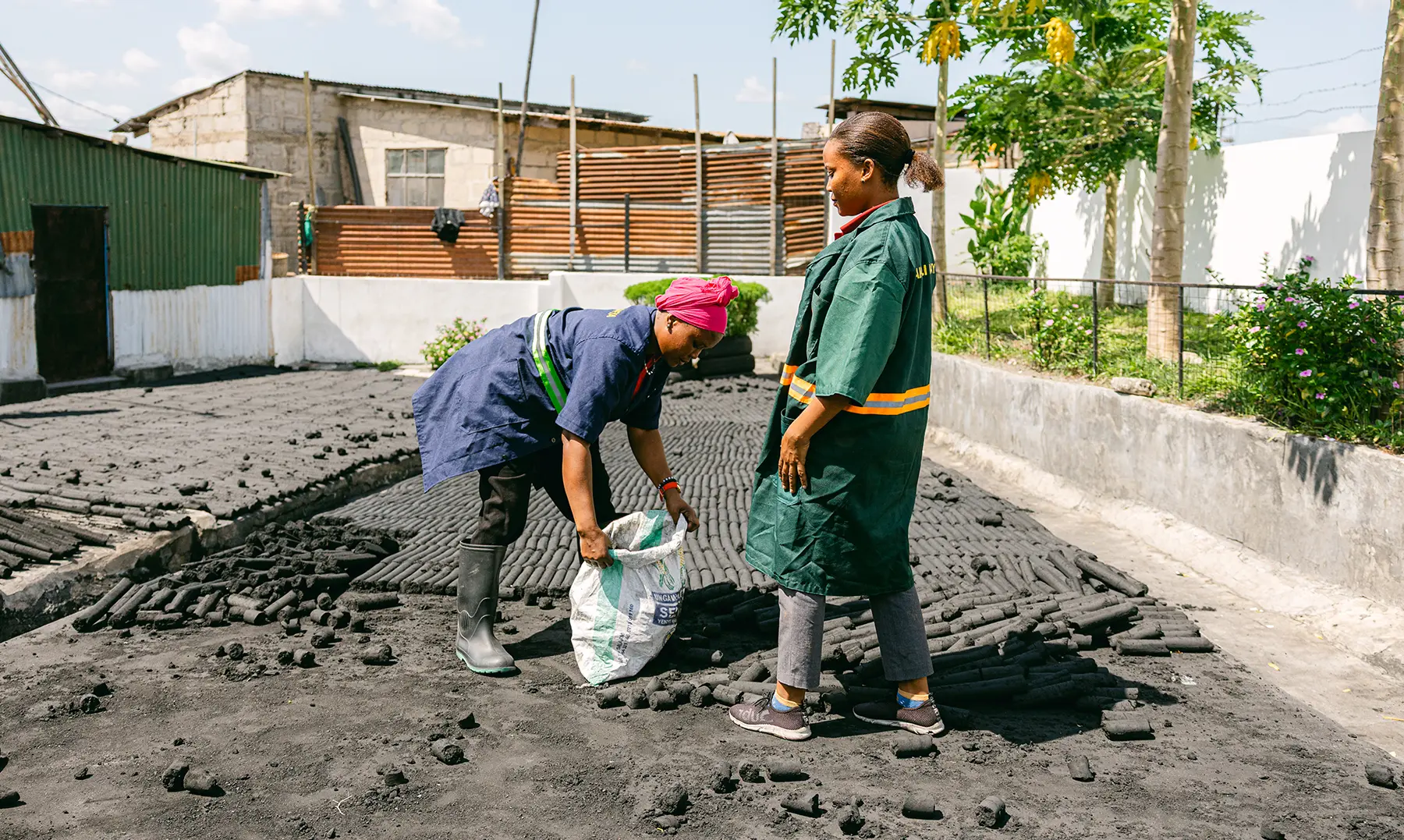
The dust is what is used to produce briquettes.
After that, next comes the mixing stage. We mix various materials to get the desired shape. We add the dust, and a binder, which is usually starch. We also add some wood shavings, and water. Then we mix everything thoroughly until it becomes a uniform blend.
Once the mixture is ready, we produce the final product. The grinding machines compress the materials, and then we get the briquettes, which we lay out so sunlight can penetrate the material and dry it thoroughly.
Once they’re dry, we move on to packaging. We package them per kilogram, and each kg sells for 500 Tanzanian shillings (~£0.15) in the market.
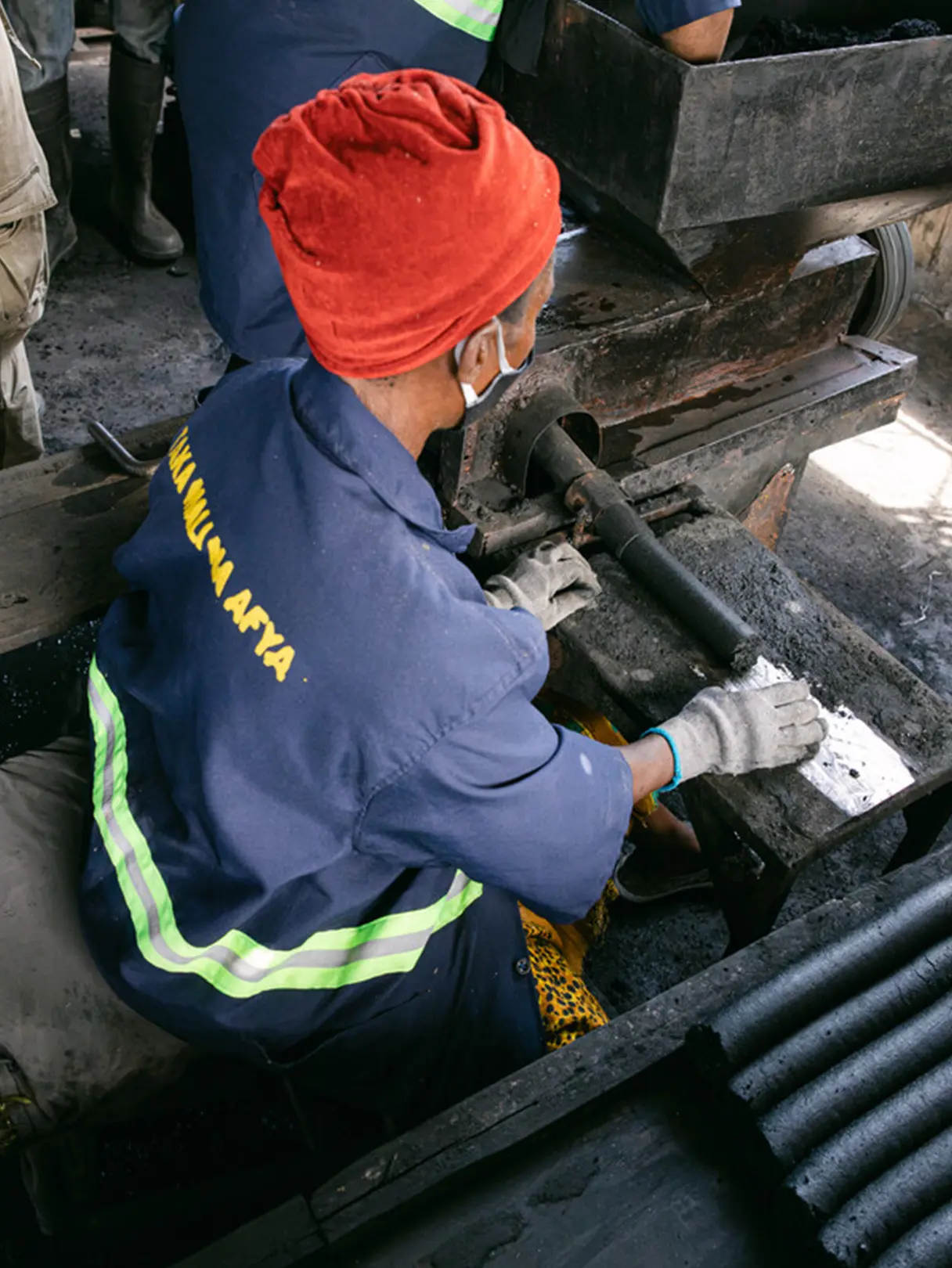
I wanted to join the group because of the work they do. But also to earn some income.
As a young person, I need to work and contribute to the nation, and this group gives me the way to do that.
Our work is so important because we remove [waste] from the environment so the surroundings stay clean. Before we started waste collection, that waste scattered around made the environment very dirty. Also, infectious diseases like cholera were common because when the environment is dirty, various diseases can spread in our communities. So by removing waste, we clean the environment, and also help prevent disease outbreaks.
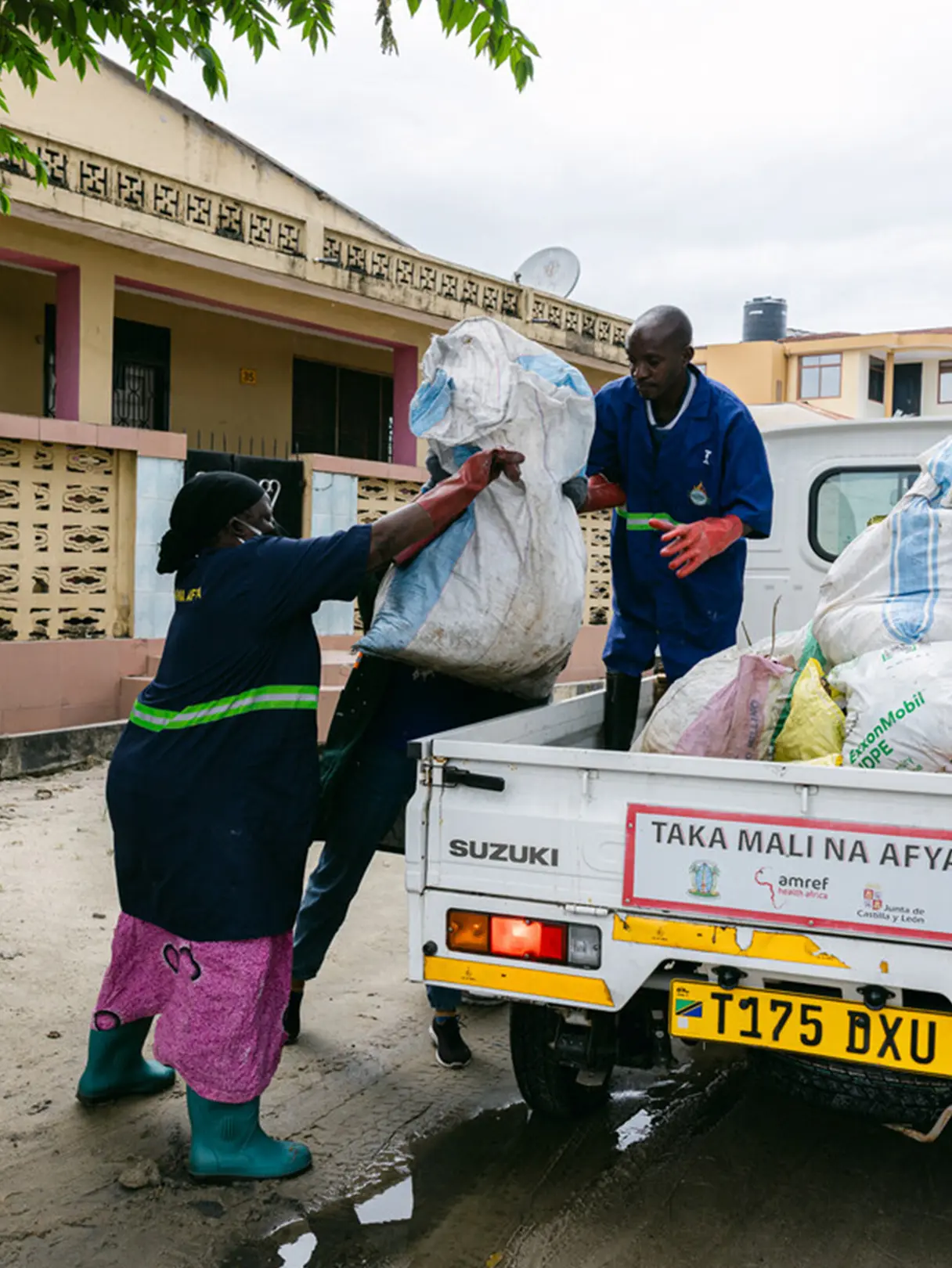
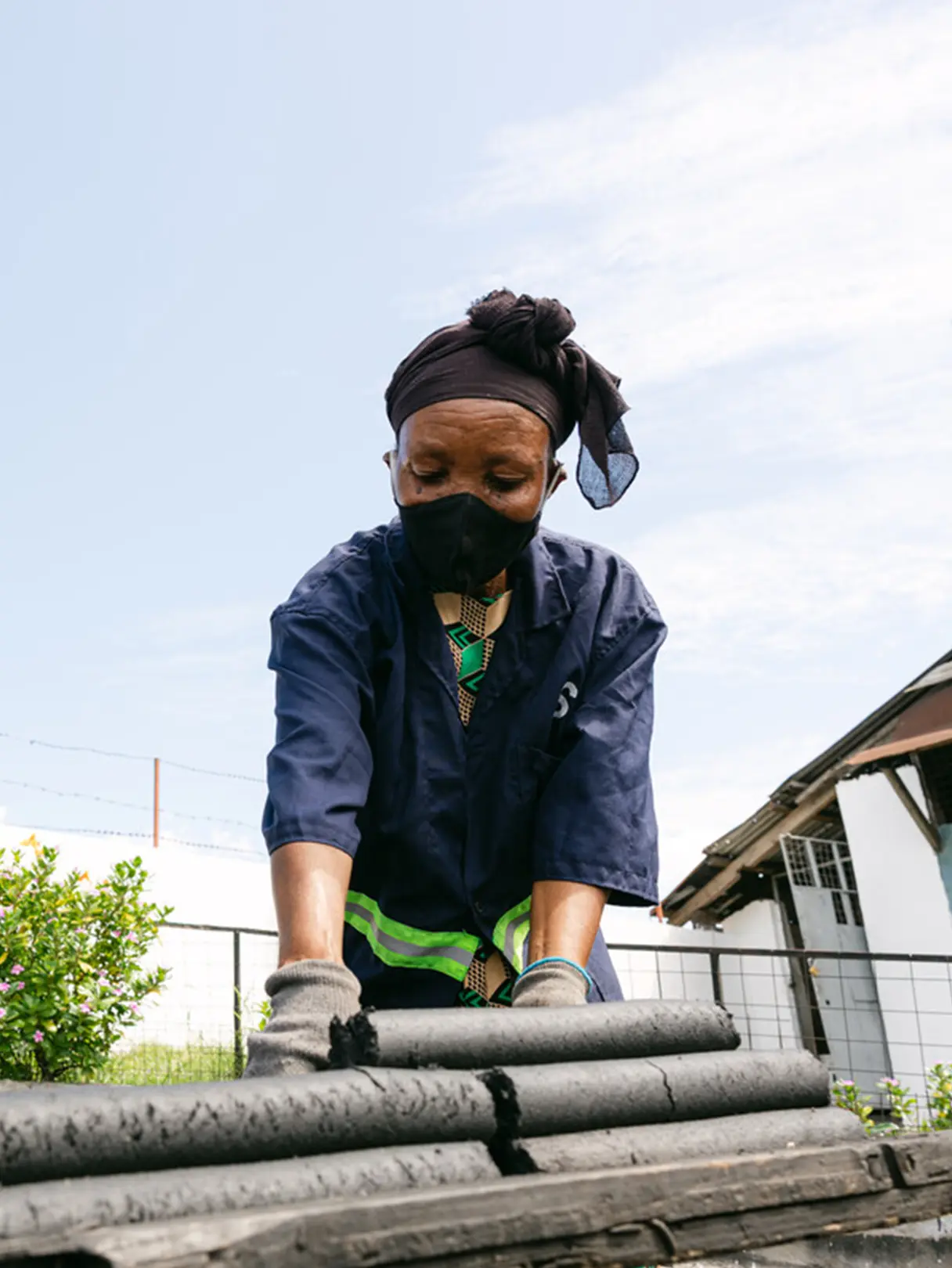
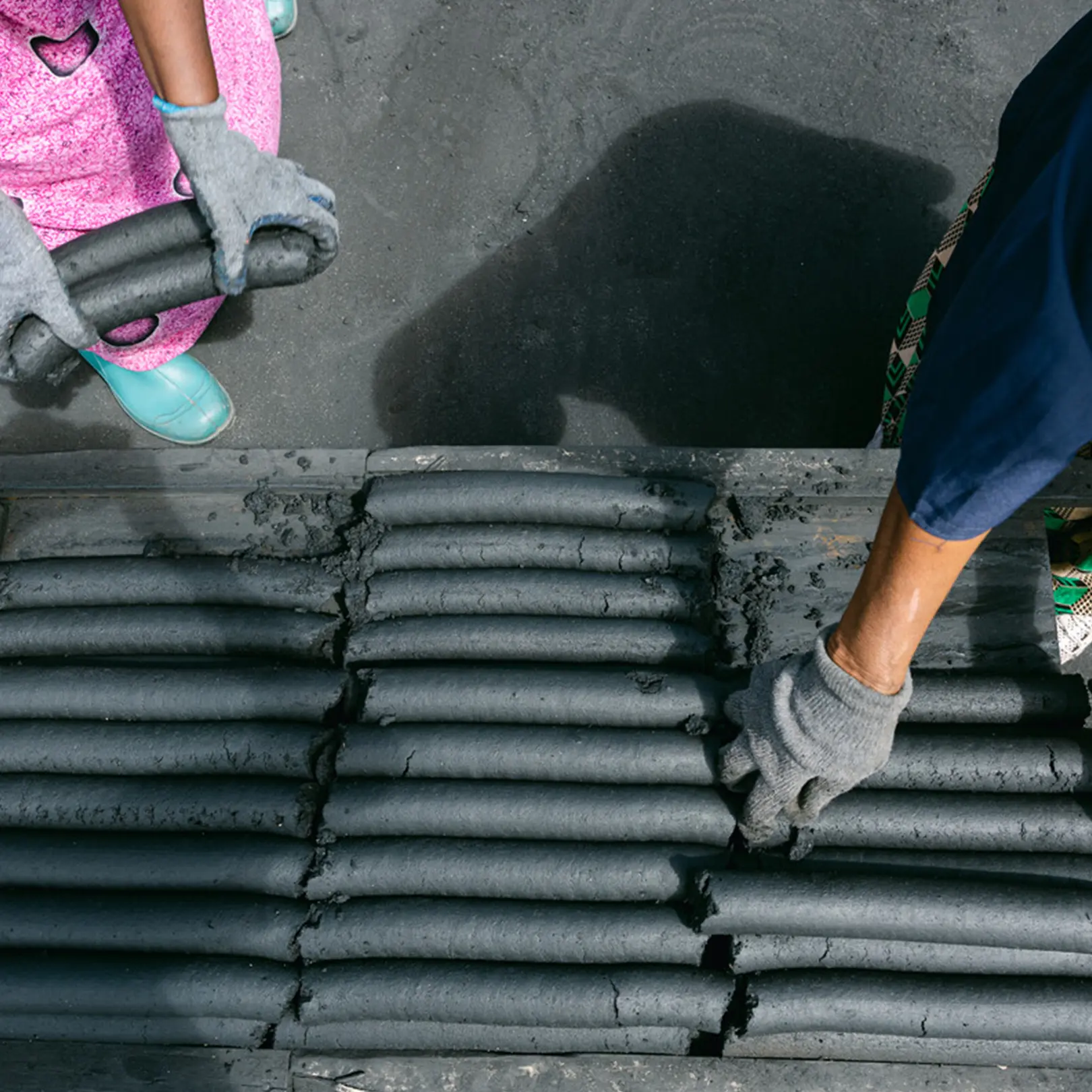
The way the community sees us has really improved, unlike when we started.
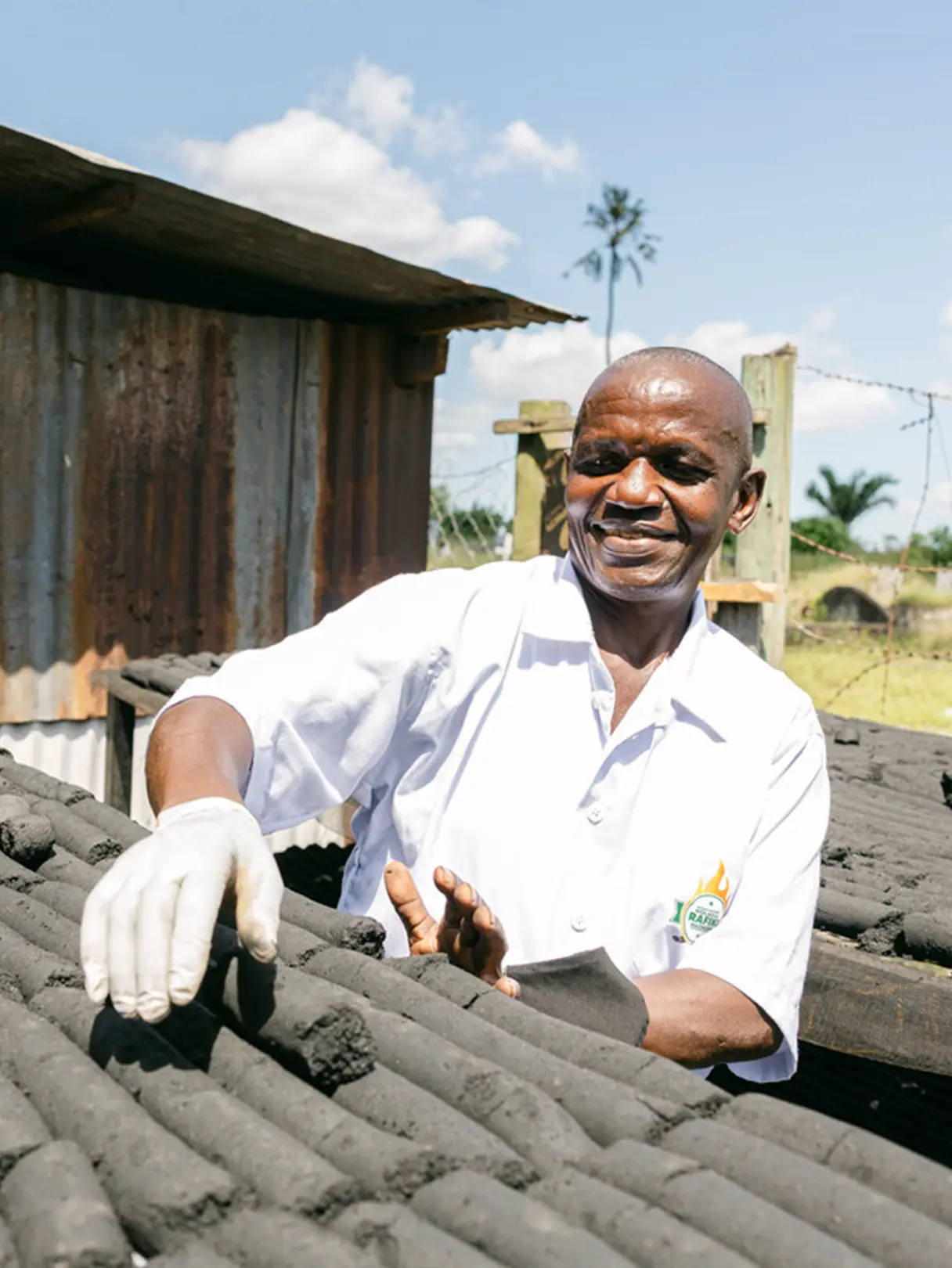
At first, people didn’t really understand what we were doing. But we worked hard to connect with the community and educate them. While teaching them, we also introduced our product. Now, the community understands what we do. They see what we provide. Our work is much easier now, and they know what we produce and how it benefits the community,
My group is very special. And it doesn’t feel like just work. I’m also gaining experience. I learn skills I can teach someone else tomorrow, so even if I quit, I can still do it on my own. So I come here to learn, not just to work. The level we’ve reached isn’t very big yet, so we can’t handle waste from all the surrounding areas. We only cover a few places, based on our current capacity.
If we could get the support to expand the work we’re doing, the first step would be to hire more workers, because right now we are very few. With our current income, we can only afford a small number of employees. Therefore, if we could get the support, the first thing would be to hire more workers, and we’d also increase our equipment. That would really help us manage a larger and wider area.
We have big hopes of going far. We hope to grow and become major producers not just in our country, but also internationally. That’s really our dream, to grow bigger and be recognised globally.
All images © Amref Health Africa/Sam Vox
Beyondthe Stories
We believe that health is a human right and the key to a brighter future.
About Amref